

The quick answer is to grow slowly. Pick one or two things to work on each season that will fit within your budget. You don’t need to grow and produce everything on your own, start small, support other farms, greenhouses, and homesteads and you will find yourself growing more and more self sufficient.
While we sit and dream of the day where we will have a bit more land and a view of the water (whether it be the ocean or a lake) we truly appreciate our little homestead in our coastal town.
This article contains affiliate links and our homesteading experiences. We receive a small commission from items purchased through our links and we appreciate every bit of support in making our home a homestead.
Our Garden Beginnings
Once we found our spot here it was tough. I wanted to grow quickly. I wanted a full garden, a green house, and laying chickens IMMEDIATELY. Since we had just purchased our home and I was working at least 45 hours a week outside of the home, that was not happening. We talked about what would work, and what we could start right away.
Our very first summer here all we grew were herbs on our porch. It was perfect. I found this fantastic hanging planter at our local nursery/greenhouse. (The quality that I am seeing online to link for you is not what I would recommend). So, try to support a smaller local garden store, they take care in selecting what they choose to sell to you and it will pay off on the quality side of things. I will mention that the downfall of these hanging pocket planters is that you really have to pay attention to watering if you live in a warm/hot area as the soil dried out quickly.
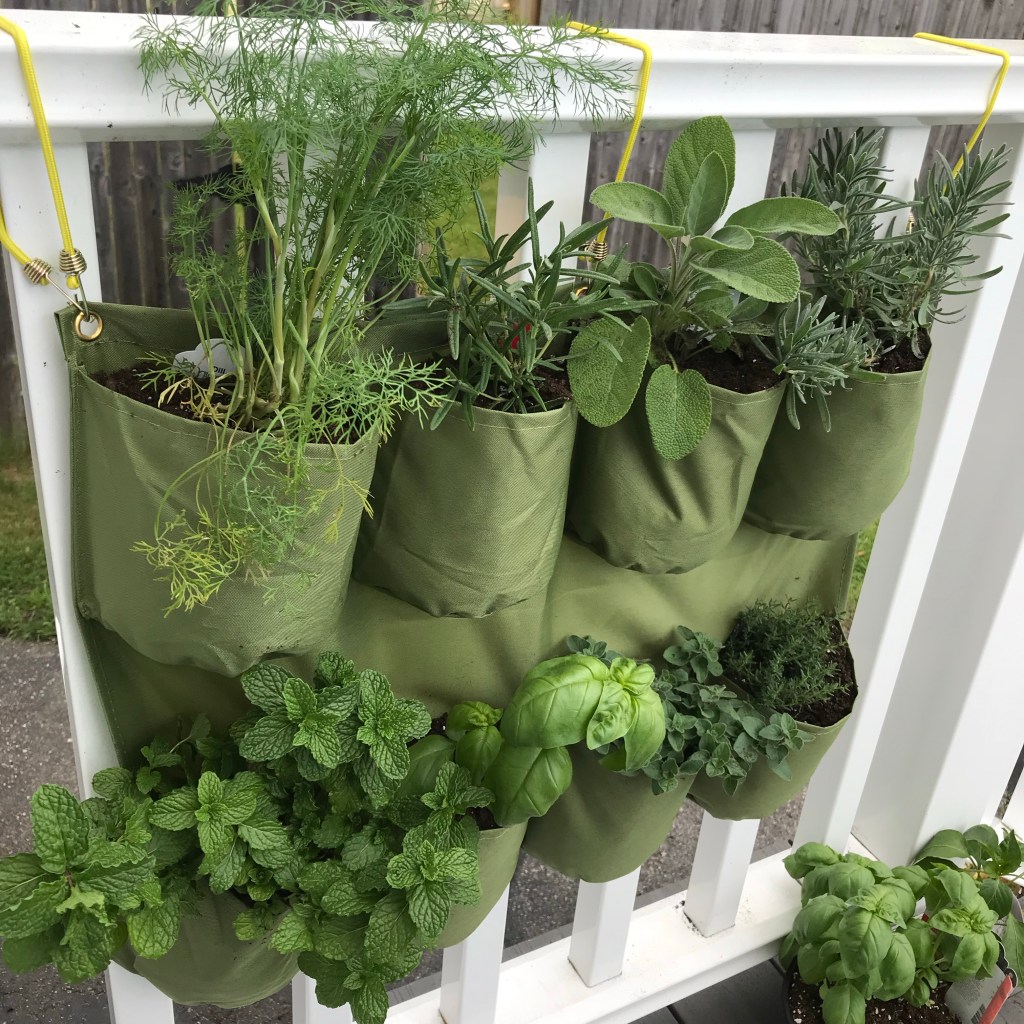
Having fresh herbs right outside our kitchen door was an absolute luxury, and now my actual herb garden lives just down the steps of this porch because of how convenient it was. Keeping your fresh herbs as close to your kitchen as possible is helpful in remembering to use them when you are on the small side of gardening and aren’t already out each meal doing mini harvests.
The other things we did that year to homestead without a garden or livestock or even really a lot of time were to pick strawberries from a local farm and make jelly (to last the whole year) as well as going apple picking and canning applesauce. You don’t have to grow everything yourself, but taking a raw product to a final one on your own while supporting other farms and homesteads still counts. We also got our compost pile started that first year. We started with one bin (of which we have since added another). You can read all about our composting here.
We didn’t see our lack of excess funds or space as a hindrance, we take it as a reminder that we just might not be ready for that next step yet, that we need to learn more about the space that we do have and learn to perfect the processes we have in place while learning more at the same time.
The next year in 2020, the summer of… epic chaos we had wanted to start a garden, but everything was expensive or sold out and I wasn’t able to get the raised garden beds that I had wanted. So we planted an apple tree, dug out a couple of plots in the ground to grow some green beans and zucchinis, and picked strawberries locally again. It wasn’t the original plan, but it was affordable and we still grew from our experiences that summer and ended up with a bounty of fresh veggies for the summer.
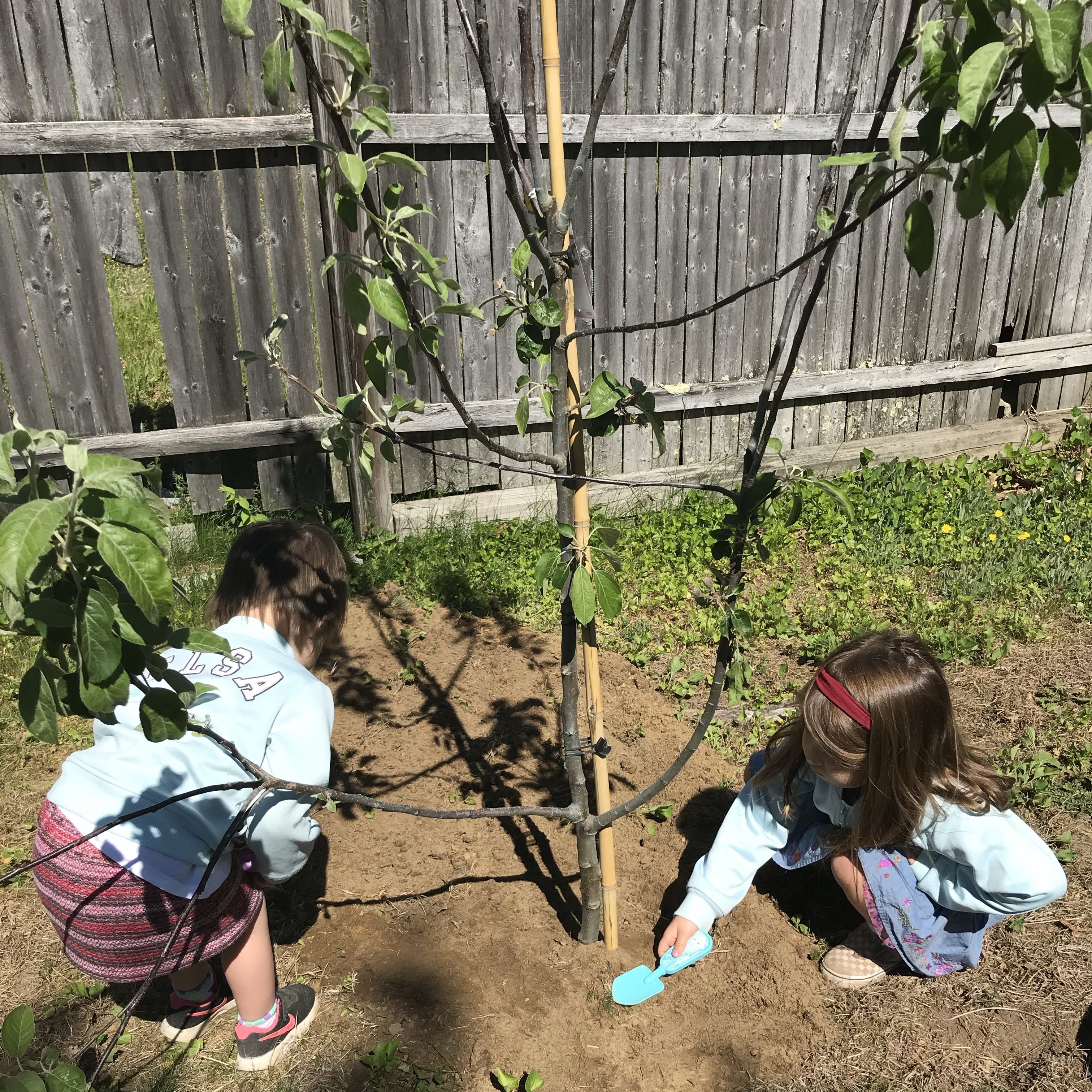
While we didn’t grow a large variety that year we spent a lot of time researching, we started learning what was hard to grow in our climate, what was easy, what should be started indoors, and how early in the season to do that. We added knowledge to our gardening practice. We learned about first and last frost dates (something we had never even considered growing up in a climate where frost was practically non existent).
In 2021 I was determined to get my raised garden beds in. Lumber prices were through the roof, building our own garden beds was not any cheaper than buying some pre fabricated ones, so we went with these. (I think I paid around $80 when we bought them, they are on sale at the time of posting this article for $70). We are now on our third summer with them and then are holding up pretty well. At the same time I also bought these lovely corrugated steel beds from Lehman’s and totally fell in love with steel beds. They hold moisture well, don’t get too hot, and there is no change in their appearance from year to year.
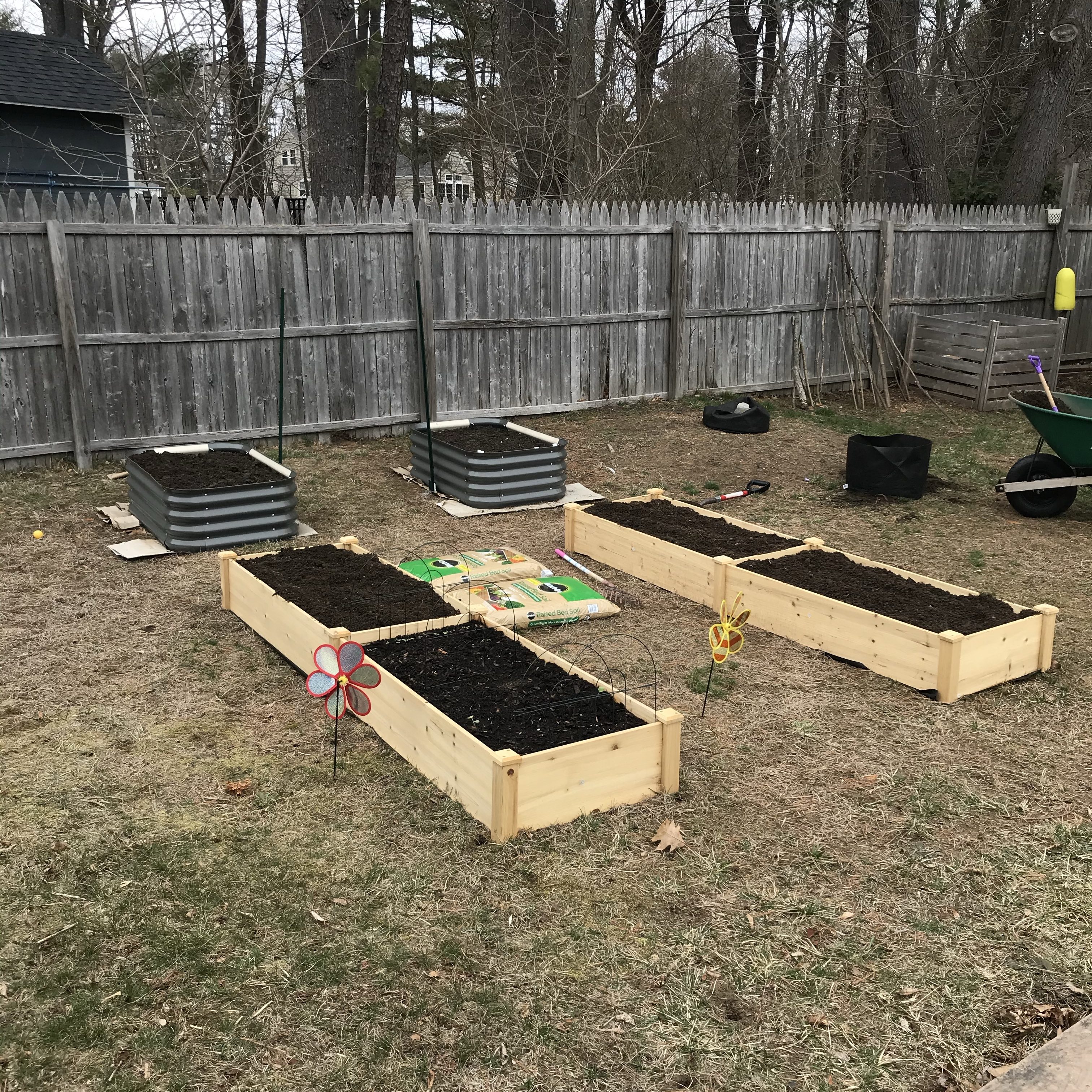
We were finally closer to the garden I had been imagining. That summer we feasted and I was happy. I had a lush green garden and the bounty to go with it, the girls found joy in daily harvests and garden snacks of peas, green beans, and carrots.
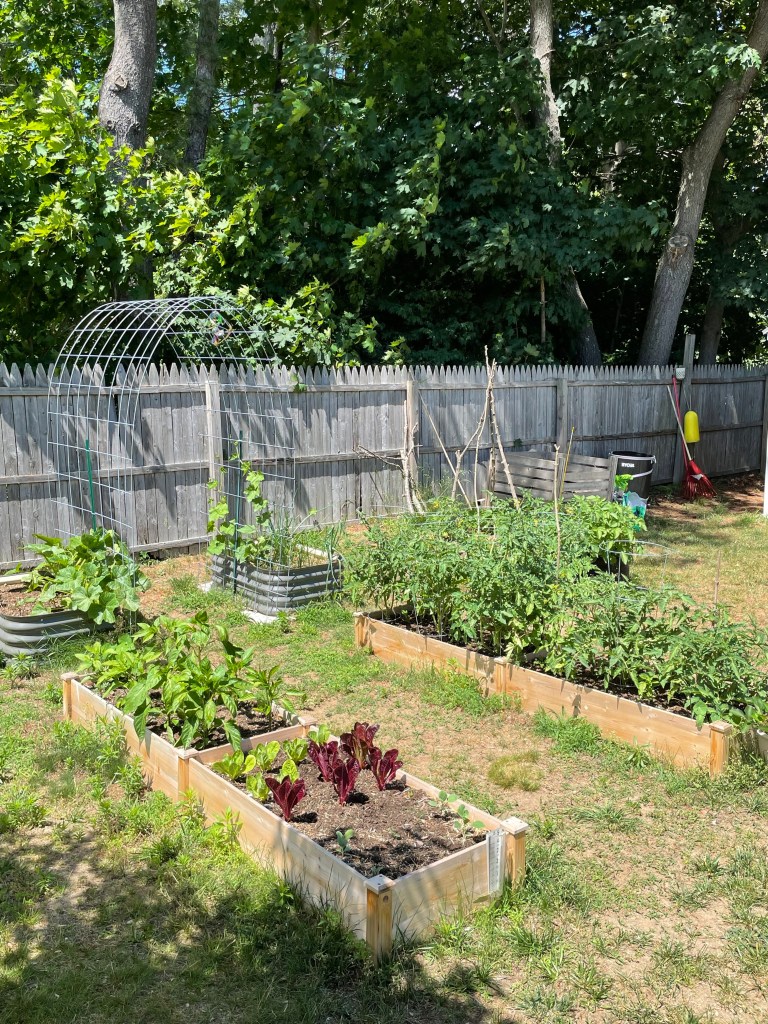

While we grew plenty of veggies to keep us from having to purchase much during the summer, but once we put the garden to bed in the fall/winter we didn’t have much left to show for it outside of some salsa I had canned. This led to us doing more homework, more research, and we came up with a set of goals for the next season.
Our big plan for 2022 was a salsa garden. Having garden salsa on hand year round was great, but we needed hot sauce, cocktail sauce, tomato sauce, and more. I wanted to freeze a mix of blanched garden veggies for easy dinners in the winter. We needed more grow space.
Last year we added two large Vego beds. They weren’t cheap, and filling them seemed like an unending chore, but we got them in. This was the state of our garden at the beginning of last summer. In addition to the new beds we also added more cattle panels to get more vertical garden growing space.

2022 ended up being the summer of inconsistency. There was inconsistency in the garden soil, inconsistency in the rain pattern, and more importantly inconsistency in our tending of the garden. Those three inconsistencies really affected our tomato crop which was the base for a lot of the goals we had set for the year.
While these inconsistencies threw us for a loop they also taught us a lot. We are still learning what the weather patterns are like here, what determines whether we need to water or not, what grows best, what the pests like, what they will leave alone, and which plants to plant together to give us an advantage in the pest situation.
Last year felt like a big mistake garden, and while our tomatoes suffered last year, our peppers did not. We had a fantastic season with peppers and we are still working our way through hot sauces and different types of pickled peppers from the summer.
Mistakes on a small homestead often cost a small amount money. Mistakes on a large homestead can cost a larger amount of money. I’d rather make our big mistakes here on our small homestead where we can more quickly and easily change direction and remedy our mistakes, often immediately, without having to wait to save up money or losing out on a season because the cleanup might have been too big.
Where we are Now
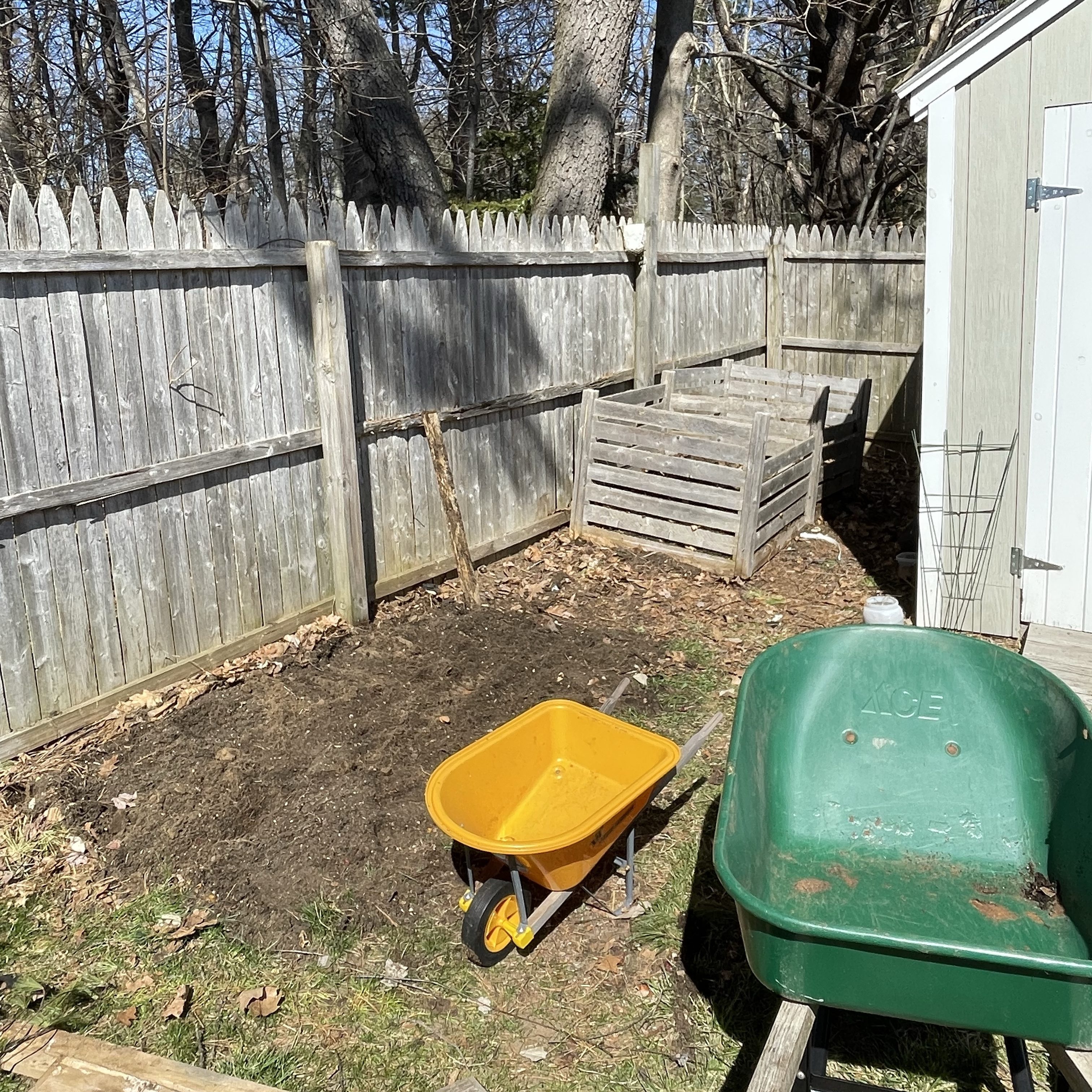
This year we are planting less tomatoes and more peppers. We haven’t added any additional raised garden space, but just yesterday (mid April) my oldest daughter and I moved our compost bins behind our shed and took the footprint space that they had left of healthy soil to plant some potatoes that had sprouted in our veggie bin.
This was a quick and easy way to add some new garden space without much effort. It definitely has me thinking about some more mobile composting ideas for the winter. Last year we put all of our raised beds to rest with a heavy layer of leaves, in addition to the cedar bedding we mulched with last year we have some lovely looking soil to dig into this season, but our in ground beds did not get as much love, so a winter compost topper on those beds has become a bit of a goal for the end of this season.
We currently have garlic in two of our larger beds to sort of force us to change up our planting rotation for better soil and plant health. Our garlic comes out typically around the 4th of July, so that will free that bed up for some fall planting.
This year we are focusing on really perfecting the pepper and salsa garden. I fermented my first hot sauce last year and I want to try a few different recipes this year.
Right now on the coast of Southern Maine we are still about 4-6 weeks out from our last frost. We have our pepper, tomato, and onion seedlings working indoors.
We also have luffa gourds growing again. Normally I start all squashes and gourds directly in the garden, but these ones we always want to try to dry as much as we can on the vine, so getting a head start is important where we live with such a short growing season. We first grew these in 2021 and still have a decent stash of sponges leftover, but I want to try to get a thicker and stronger sponge this go round.
Peas, green beans, carrots, and cold loving greens will go in the ground in the garden at the end of the month and we will be off and running!
The biggest takeaway here is to start slow, learn something new or add something new each year.
The gardens you see online, on instagram, and on pinterest weren’t built in a day. They weren’t built without trial and error. Don’t try to grow too quickly. Take only risks and mistakes that you can afford to mess up on. Don’t put all your eggs in one basket.

 surfandsewhomestead.com